Every Minute Counts: Voter Operations & Experience
Elections in the United States are run by thousands of local jurisdictions, each with its own polling place layouts, voting machines, staffing, and procedures. As a result, what we know about the voting process tends to come from isolated reports. Collecting systematic, comparable data is essential to the study of American elections and can help improve accessibility, reduce administrative burden, and strengthen public trust in elections.
Every Minute Counts: Voter Operations and Experience (EMC-VOX) aims to fill this gap by collecting systematic data on the voting process at scale. The project brings together a cross-institutional team of more than 40 researchers from universities across the country to observe polling places at voting sites nationwide.
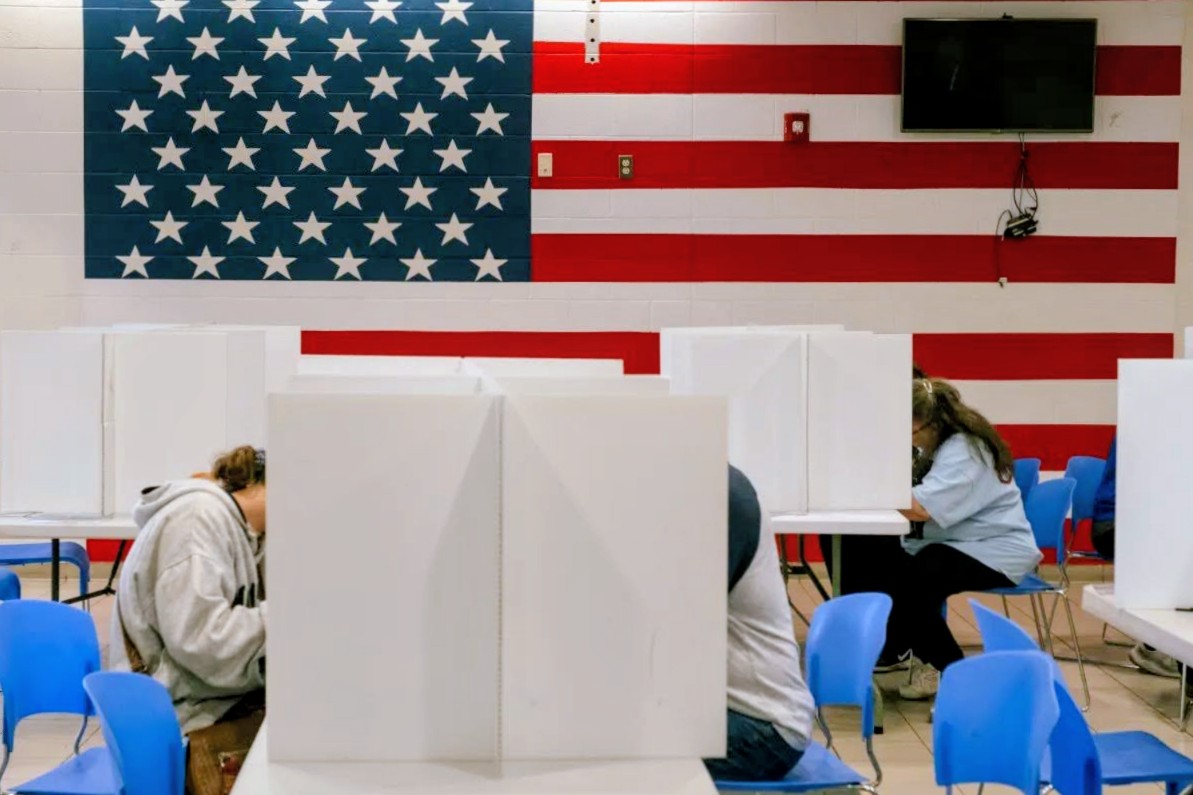
Every Minute Counts: Voter Operations and Experience (EMC-VOX) is a national research collaboration to collect systematic data on the design and experience of the voting process, facilitated by an interdisciplinary partnership between the University of Wisconsin–Madison’s Elections Research Center and the University of Rhode Island’s Engineering for Democracy Institute. The project grew out of research convenings supported by The Election Trust Initiative.
EMC-VOX builds on a substantial body of polling place observation studies, including the foundational work of Charles Stewart III (MIT Election Data and Science Lab) and many other elections scholars. Most directly, the current project extends a large-scale, multi-university study conducted during the 2016 election (Stein et al. 2020; Mann et al. 2018) and involves many of the same researchers from that pioneering study. In particular, we are grateful to Charles Stewart, Michael Herron, Robert Stein, and Christopher Mann for their leadership on the 2016 study.
Every Minute Counts: Voter Operations and Experience (EMC-VOX) is a large-scale national research collaboration of researchers from universities across the country, built on an interdisciplinary partnership between the University of Wisconsin–Madison’s Elections Research Center and the University of Rhode Island’s Engineering for Democracy Institute. The project is co-led by Barry Burden and Gretchen Macht, whose combined expertise in election administration, engineering, and human-centered research shapes its interdisciplinary approach.
Barry Burden is Professor of Political Science and Director of the Elections Research Center at the University of Wisconsin–Madison. His research focuses on election administration, voter participation, and political parties.
Gretchen Macht is Professor of Mechanical, Industrial, and Systems Engineering and Director of the Engineering for Democracy Institute at the University of Rhode Island. Her research focuses on voting systems, team performance, and human systems engineering.
Every Minute Counts: Voter Operations and Experience (EMC-VOX) is made possible by the participation of researchers across the country, each observing polling places in and around their own communities. In many cases, data collection is carried out by faculty-student research teams. The 2026 study is currently in development, with 2028 planning already underway.
Researchers. Our current coverage skews toward areas near participating universities — we’re looking to expand, especially outside college towns. Interested in polling place observation in your area, whether on your own or with a student research team? Contact us to learn more!
Election Officials. We’re happy to share our findings with local election offices, and we welcome conversations with officials interested in participating in a future observation study. Contact us to learn more!
To reach the EMC-VOX team, please send an email to elections@polisci.wisc.edu.
Data & Methods
Learn more about the EMC-VOX project data and methodology in the drop-down menus below.
EMC-VOX observes voters as they participate in the voting process, collecting data on individual voters’ experience of voting as well as the polling place itself:
- Timing at various stages
- Waiting in line
- Checking in
- Receiving a ballot
- Marking a ballot
- Scanning a ballot
- Early departures from the line (balking and reneging)
- Voter registration at the polls
- Provisional ballot use
- Voters turned away
- Line lengths
- Physical layout of the polling place
- Polling place staffing
- Voting accessibility
- Voting equipment
Details to come.
Details to come.
Data Coverage
EMC-VOX is a large-scale polling place observation study collecting data on the voter experience and polling place operations at voting sites across the United States. Coverage varies by election year — use the tabs below to explore data for each.
EMC-VOX extends the landmark 2016 collaborative polling place observation study (Stein et al. 2020), which included 28 counties across 19 states. Dot size below shows the number of voters observed in each county.
Map coming soon
The 2026 cycle of the EMC-VOX study is currently in development.
Research & Reports
Waiting to Vote in the 2016 Presidential Election
Stein et al. 2020 – This nationwide study examines polling place operations during the 2016 U.S. presidential election, including voter wait times, check-in procedures, and ballot completion.
Key Findings
- Polling place activity peaks in the morning, leading to the longest lines, wait times, and voting times.
- Strict photo voter ID requirements increase check-in times in majority nonwhite polling places but can reduce check-in times in majority-white polling places where driver’s licenses are scanned.
- Few voters leave the check-in line after joining it, even when they experience a wait.
Pedagogical Value of Polling Place Observation by Students
Mann et al. 2018 – This study evaluates the educational impact of a multi-university polling place observation project conducted during the 2016 election.
Key Findings
- Students gained knowledge of election science and research methods through hands-on election observation.
- The experience had lasting educational value and inspired continued interest in research.
- Participation fostered civic engagement and appreciation for the study and administration of democratic elections.